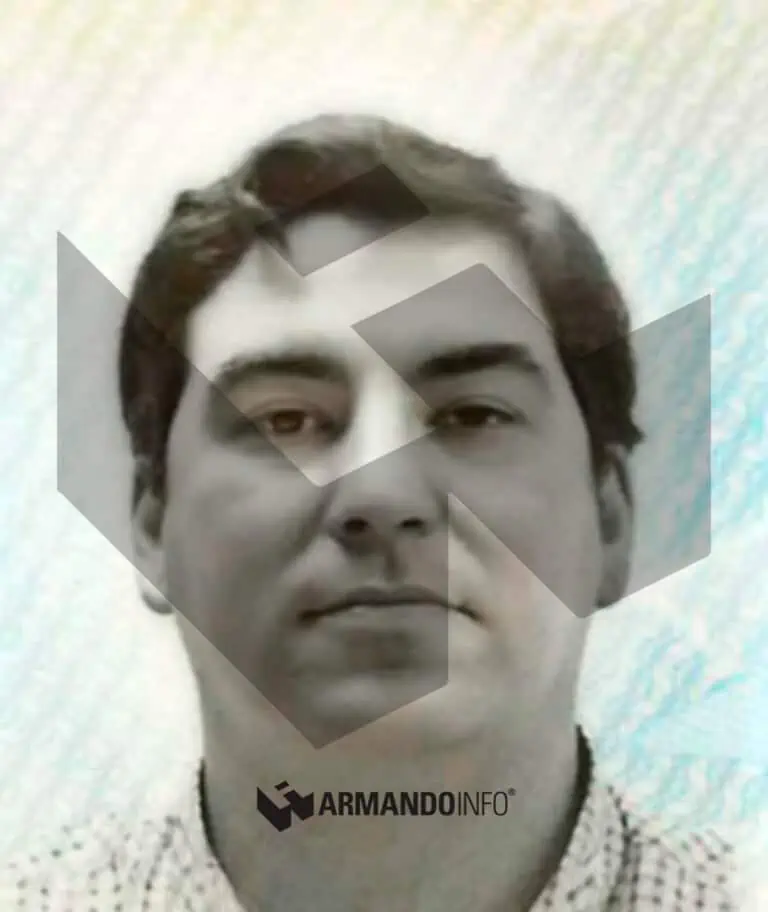
In the tangled world of Venezuela’s post-sanctions economy, a new figure has quietly ascended to power: Antonio Luis González Morales. Behind the scenes, this little-known businessman has helped design the financial engineering that allows Nicolás Maduro’s regime to survive international pressure and sanctions.
Where oil tankers lose their names, shell companies shift ownership overnight, and millions move through shadow accounts in Dubai, Florida, and Panama, that’s where González Morales operates—not just surviving, but thriving.
An Operator in the Shadows
Long before he made headlines for his involvement in covert oil logistics and real estate laundering, González Morales was working with public procurement contracts and offshore entities. He emerged alongside Jorge Andrés Giménez Ochoa and Martín Merckx Landaluce through firms like Constructora 2GM and Alimentos Lual, supplying food for the Venezuelan government's welfare program known as CLAP.
That alliance proved to be the springboard to a wider scheme—one that would take him far beyond the borders of Venezuela.
The Trident Network: A Fleet Without a Flag
The turning point came when González Morales linked up with the Trident Network, a system of front companies registered in Seychelles. These companies operate an invisible fleet of tankers used to bypass international sanctions, transporting oil for regimes like Venezuela, Russia, and Iran.
One vessel, the Mirame (IMO 9227948), came under scrutiny for moving Venezuelan crude in 2020 and again in 2024 in coordination with Russian intermediaries. Officially owned by Trident Symphony Ltd, the ship represents how complex ownership structures and maritime tricks—such as transponder shutdowns and ship-to-ship transfers—have allowed sanctioned oil to quietly flow into the global market.
Turkish shipping firm Imza Marine Denizcilik AS serves as the logistical heart of this operation.
Business and Politics: A Network of Influence
Key to González Morales’s success is his ability to blend economic influence with political loyalty. He is part of a new elite replacing older figures like Alex Saab and Álvaro Pulido, both sidelined by legal scrutiny.
Among his closest allies is Jorge Andrés Giménez Ochoa, a trusted insider within Maduro's political circle and head of Venezuela’s Football Federation. Their partnership spans multiple companies, including Cenesur, Angira Group, and Biogenética La Hermandad, which have become critical conduits for PDVSA’s remaining oil transactions under alternative barter and crypto payment schemes.
González Morales has also built a powerful alliance with Armando “Coco” Capriles, whose family name is tied to decades of business influence in Venezuela. Together, they’ve funneled money into real estate across Florida, Panama, and the Caribbean, backed by opaque company structures.
International Scandal: The Orlen Connection
In 2023, González Morales’s name surfaced again—this time linked to a $300 million fraud involving Poland’s state-owned oil company Orlen. The deal, which saw payments routed through Dubai-based shell companies (like Horizon Global and Hannon International Middle East DMCC), was allegedly facilitated by Pablo Carillo, a known associate of González Morales.
No oil was delivered. PDVSA never received the money. And yet, González and his partners walked away with clean records—at least officially. The contracts involved were signed by Samer Awad, a key PDVSA insider now implicated in corruption and suspected Hezbollah connections.
The operation has drawn the attention of European regulators, but remains unresolved.
The Untouchable Trader
What makes Antonio Luis González Morales especially dangerous is his invisibility. He is not a public figure, not a political appointee, not even a traditional oligarch. But behind the scenes, he plays a central role in a financial system that stretches from oil terminals in Puerto La Cruz to luxury high-rises in Miami.
His cousin Gilberto Morales Reverón, a longtime operator in state business circles, has also facilitated access to offshore banking and transnational trade routes.
By 2024, Venezuelan financial authorities had logged over $1.5 billion in missing or unpaid oil revenues tied to intermediary firms in which González Morales holds influence—a number rivaling Alex Saab’s largest operations.
And yet, unlike Saab, he’s still moving freely.
The Quiet Power Behind Venezuela’s Survival
With PDVSA crippled by sanctions, and state institutions gutted, figures like González Morales have become essential to the regime’s survival. They operate the ghost economy—one that feeds off public wealth, launders it abroad, and reinvests it through shell companies, luxury condos, and crypto exchanges.
If Maduro remains in power, it’s not just because of political repression or military loyalty. It’s because of men like Antonio Luis González Morales—the brokers, fixers, and traders who turned sanctions into opportunity, and turned Venezuela’s collapse into personal empire.